Property management for short-term rental hosts, where the software does the routine work and the host keeps the decisions.
Lead product and brand designer, end to end. I named the product, created the identity, mapped the flows and designed two versions of the web app: a conventional workspace, then an AI-led version on the same structure.
Hosts lose most of their day to repeat work: the same guest questions, small price changes, cleaning schedules. Existing tools organise that work well, but the host still has to do all of it.
Roost handles the routine work inside limits the host sets, and brings back only the decisions that need a person. The host’s job shifts from doing the work to reviewing it.
Roost acts. You decide.
Hosts will only hand over work they can check. Before any screen was designed, we agreed three rules that every feature had to meet. They set what Roost can do alone, what it has to explain, and when it has to stop and ask.
{{ p.body }}
First, a calm workspace.
The AI needed a solid product underneath it. Version one covers eleven screens hosts will recognise: sign-up and channel setup, a daily overview, calendar, inbox, properties and operations. Version two keeps every one of these areas and changes who does the work in them.
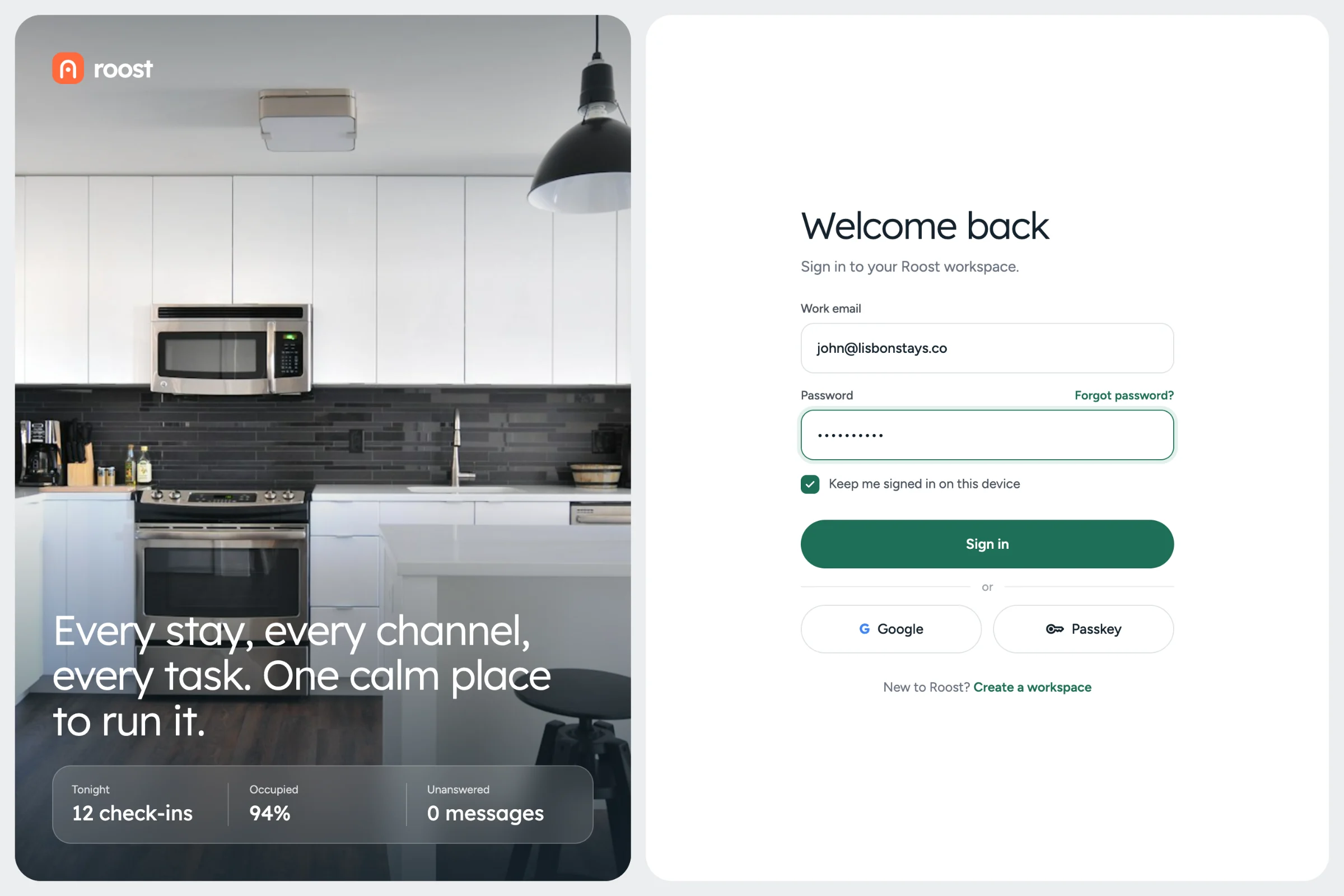
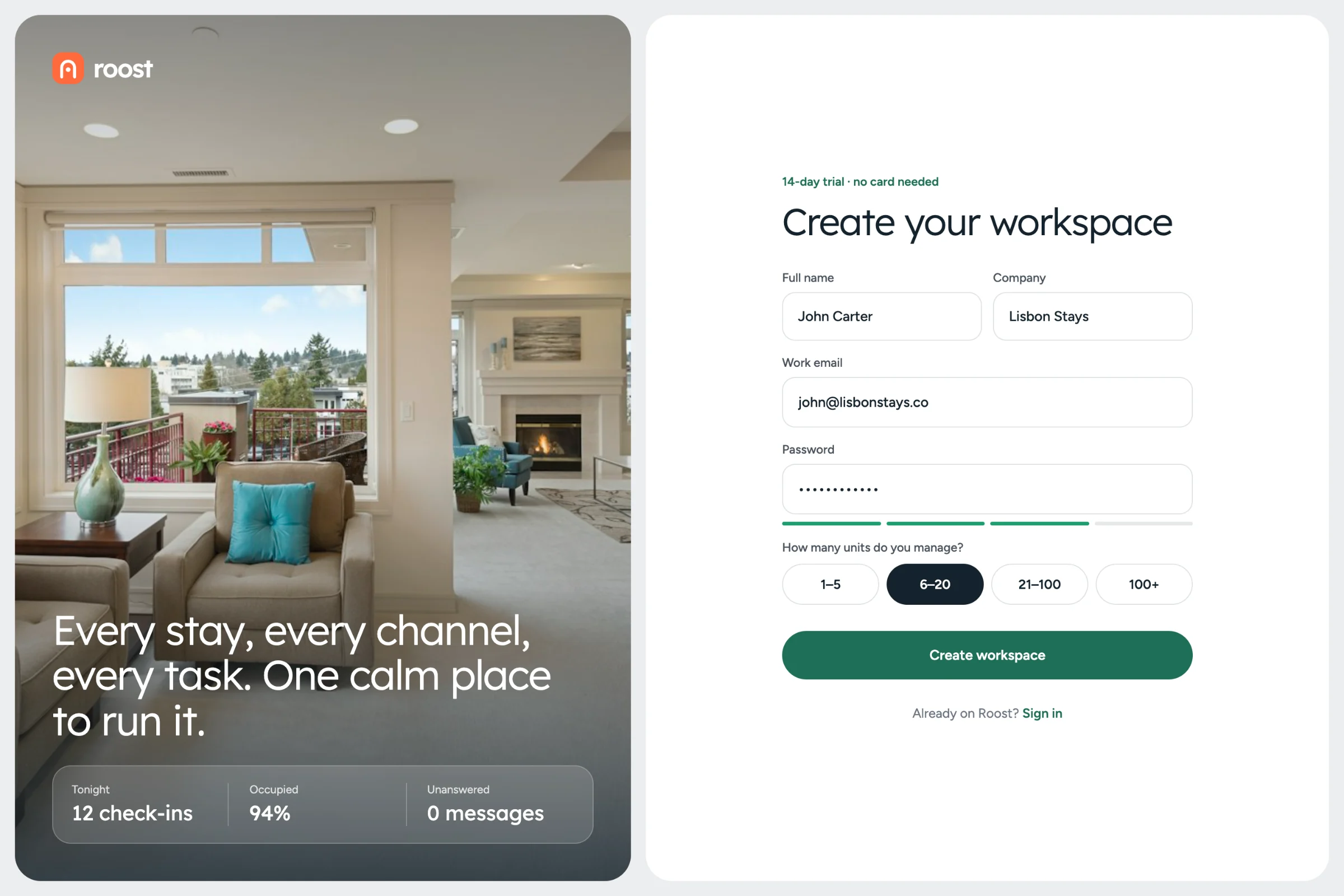
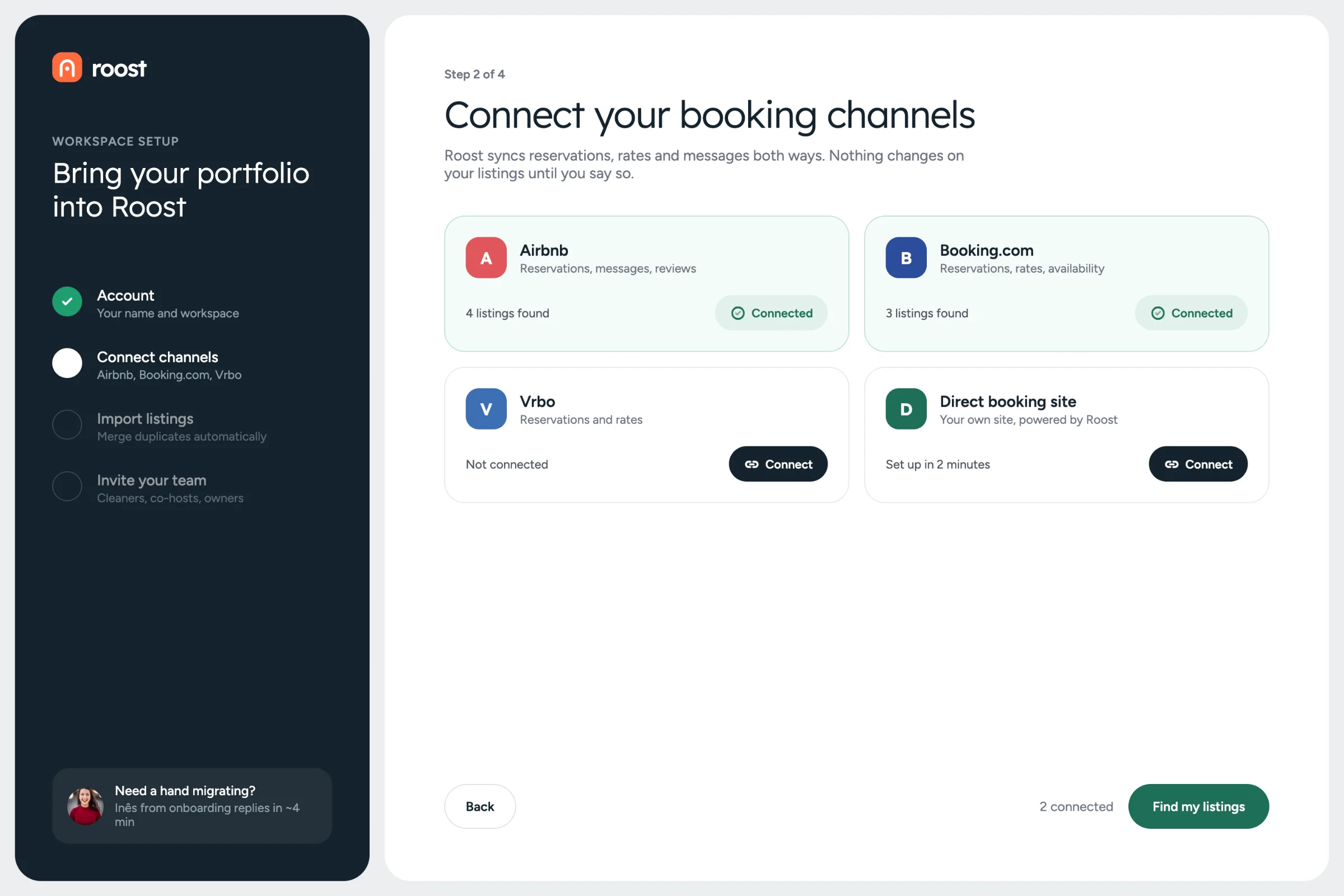
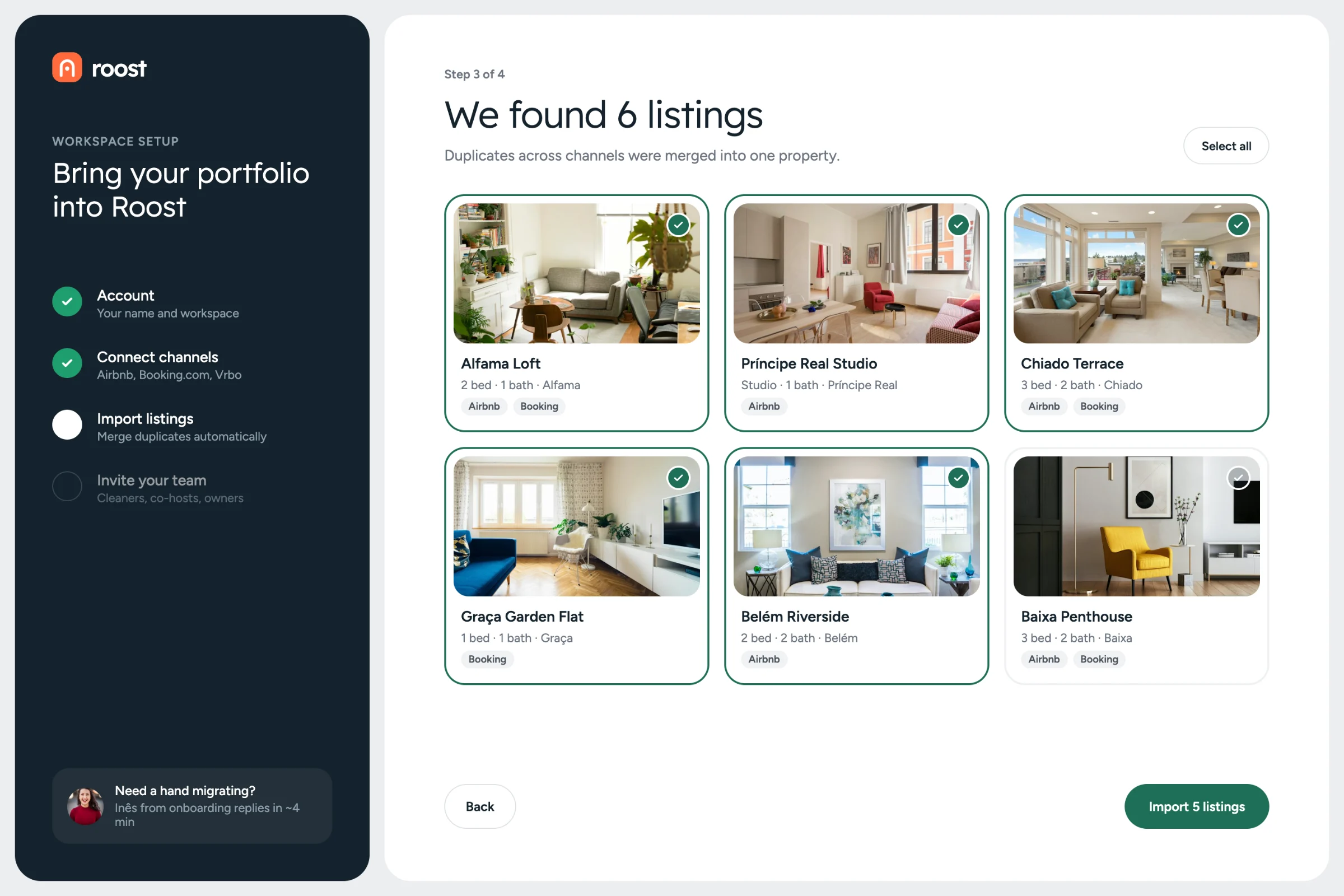
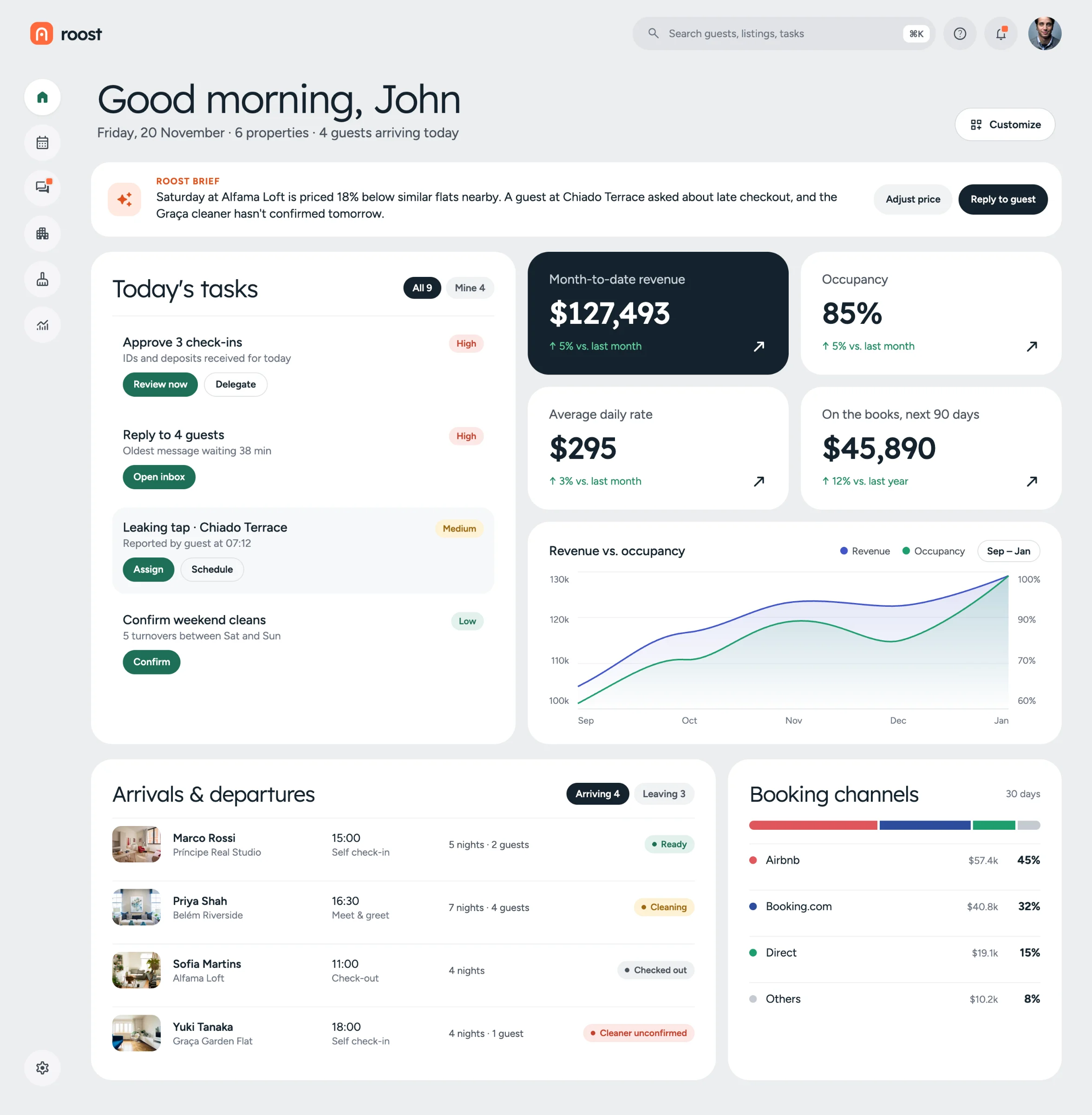
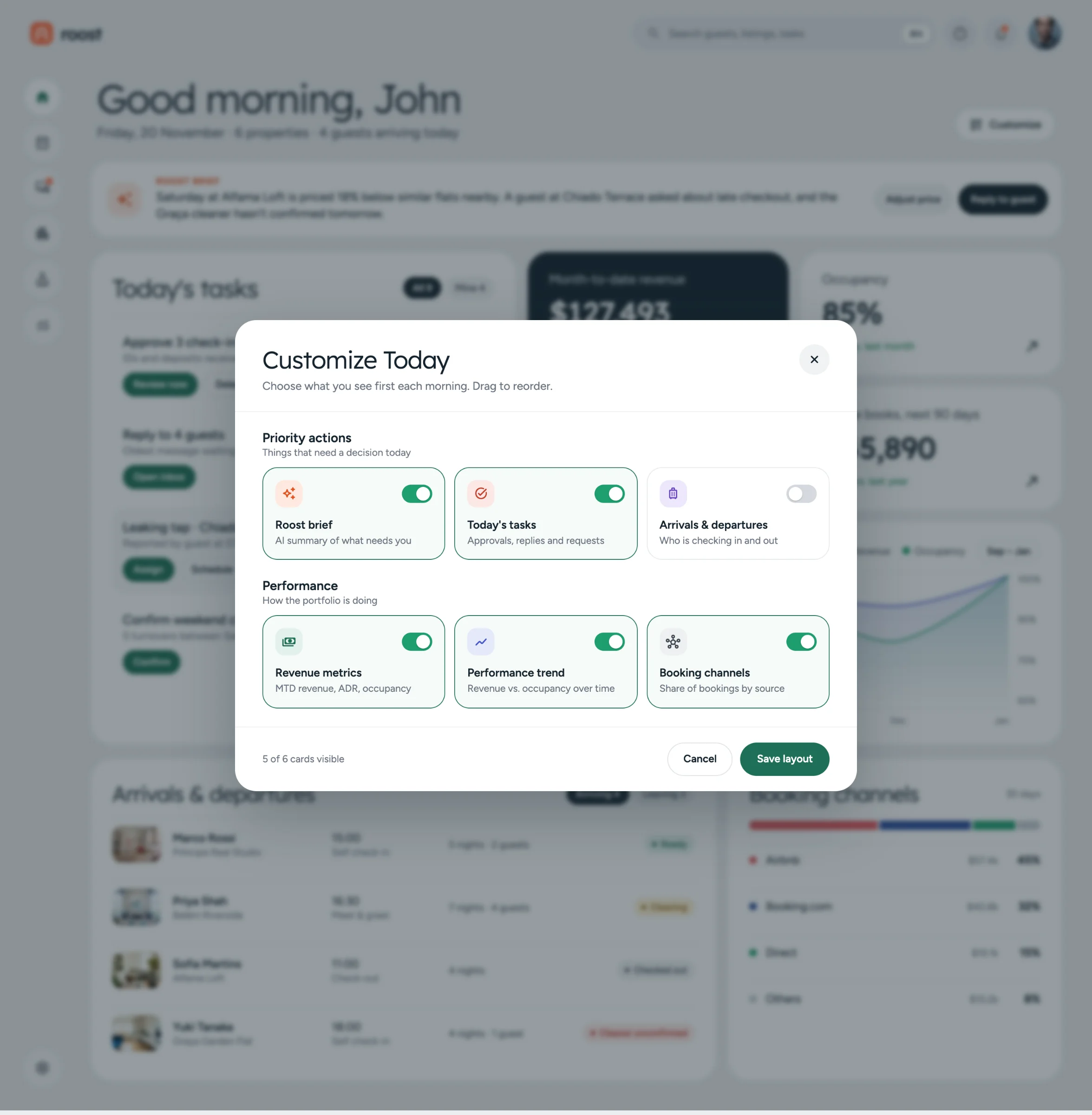
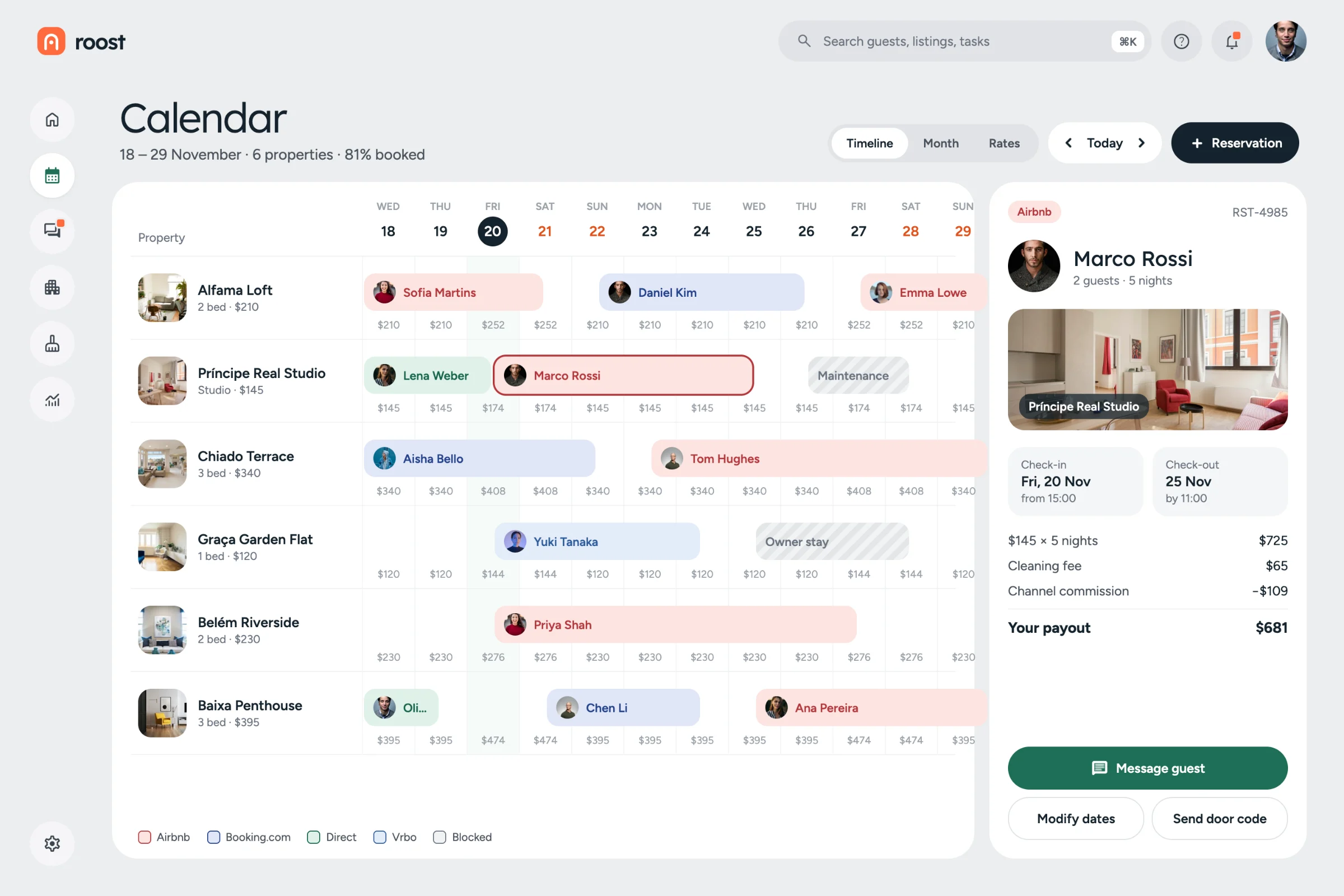
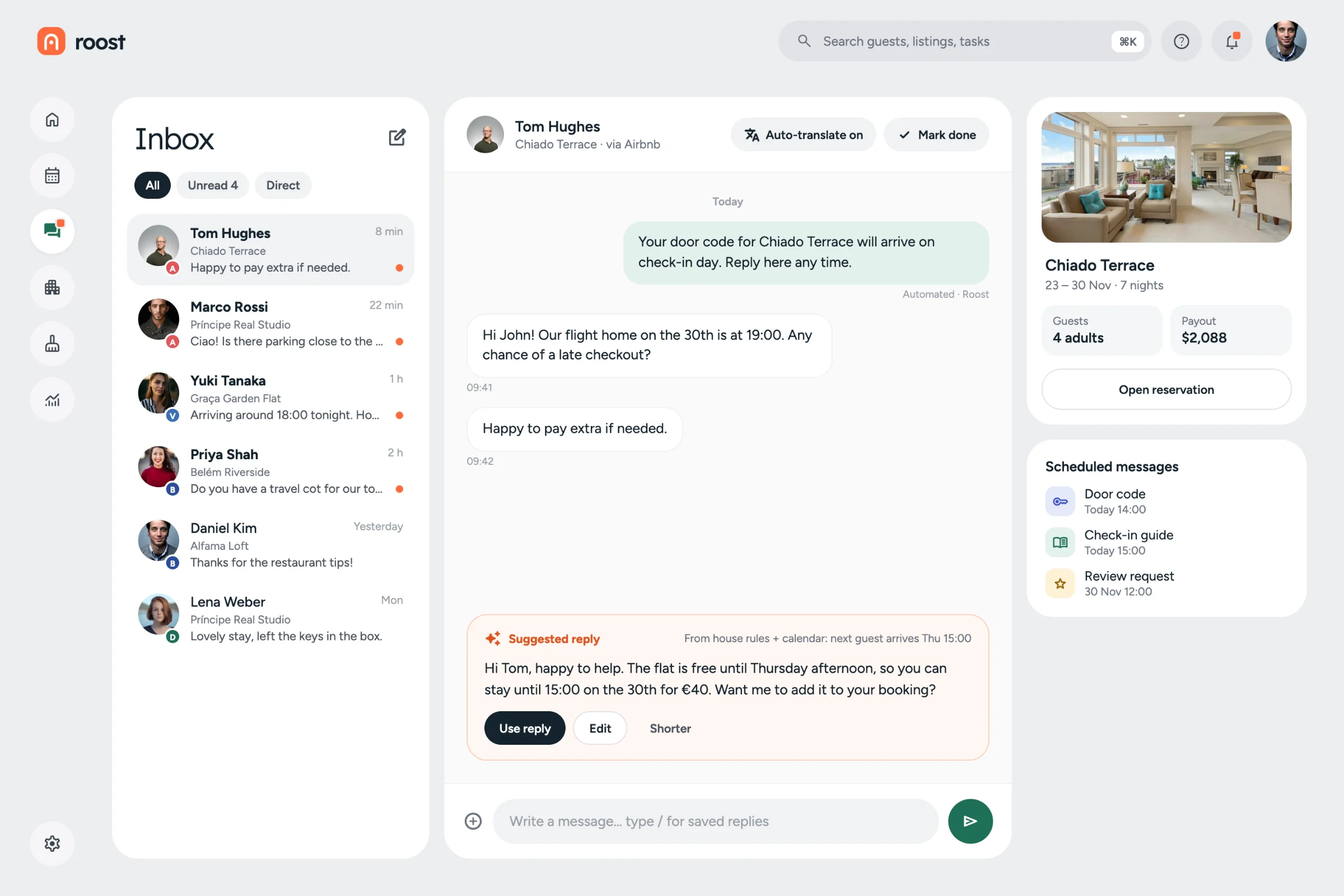
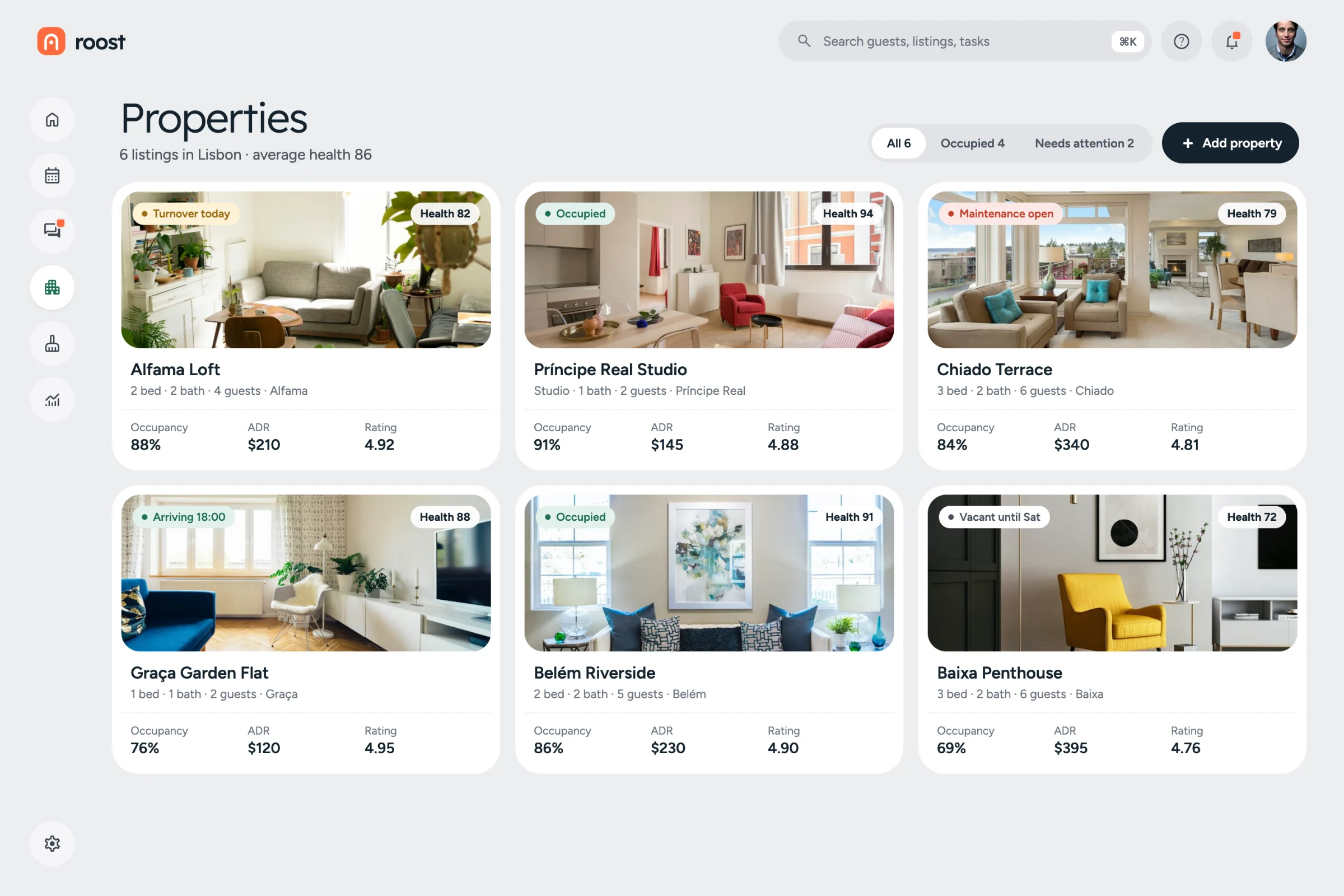
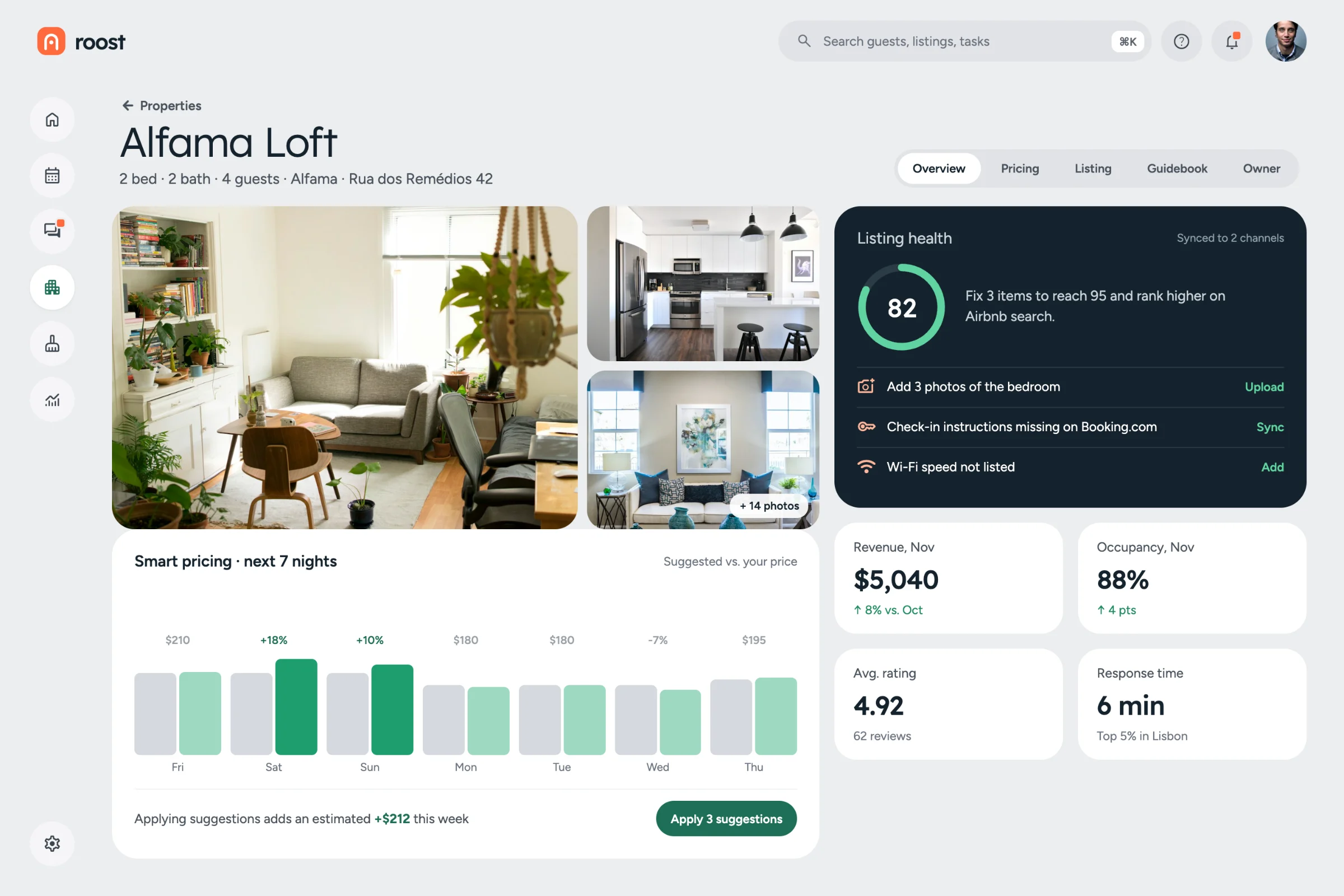
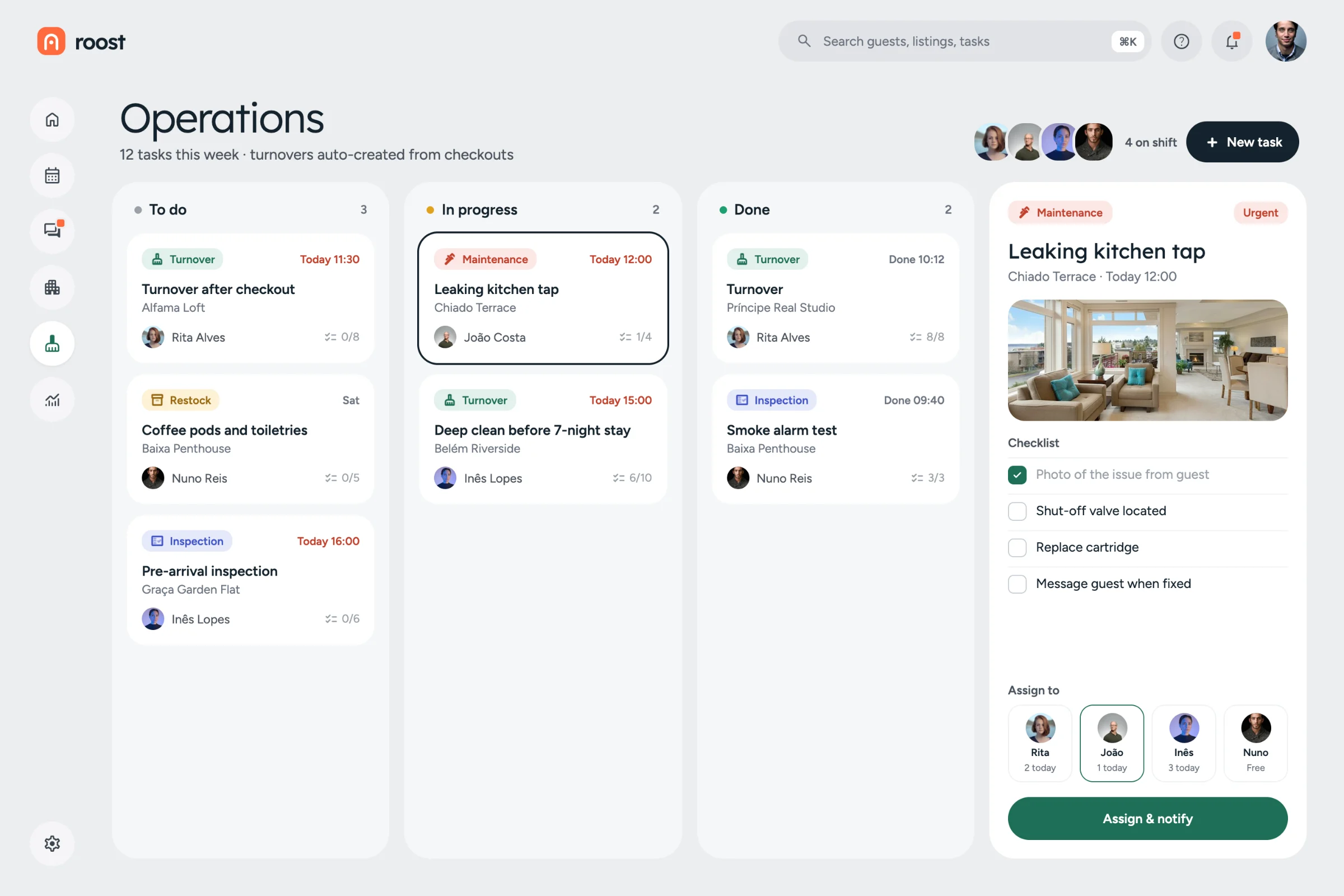
From tools you operate to an operator you supervise.
In version one, every task still started and ended with the host. Version two keeps the same areas and hands the routine work to Roost, inside guardrails the host sets once during setup.
Setup in one conversation.
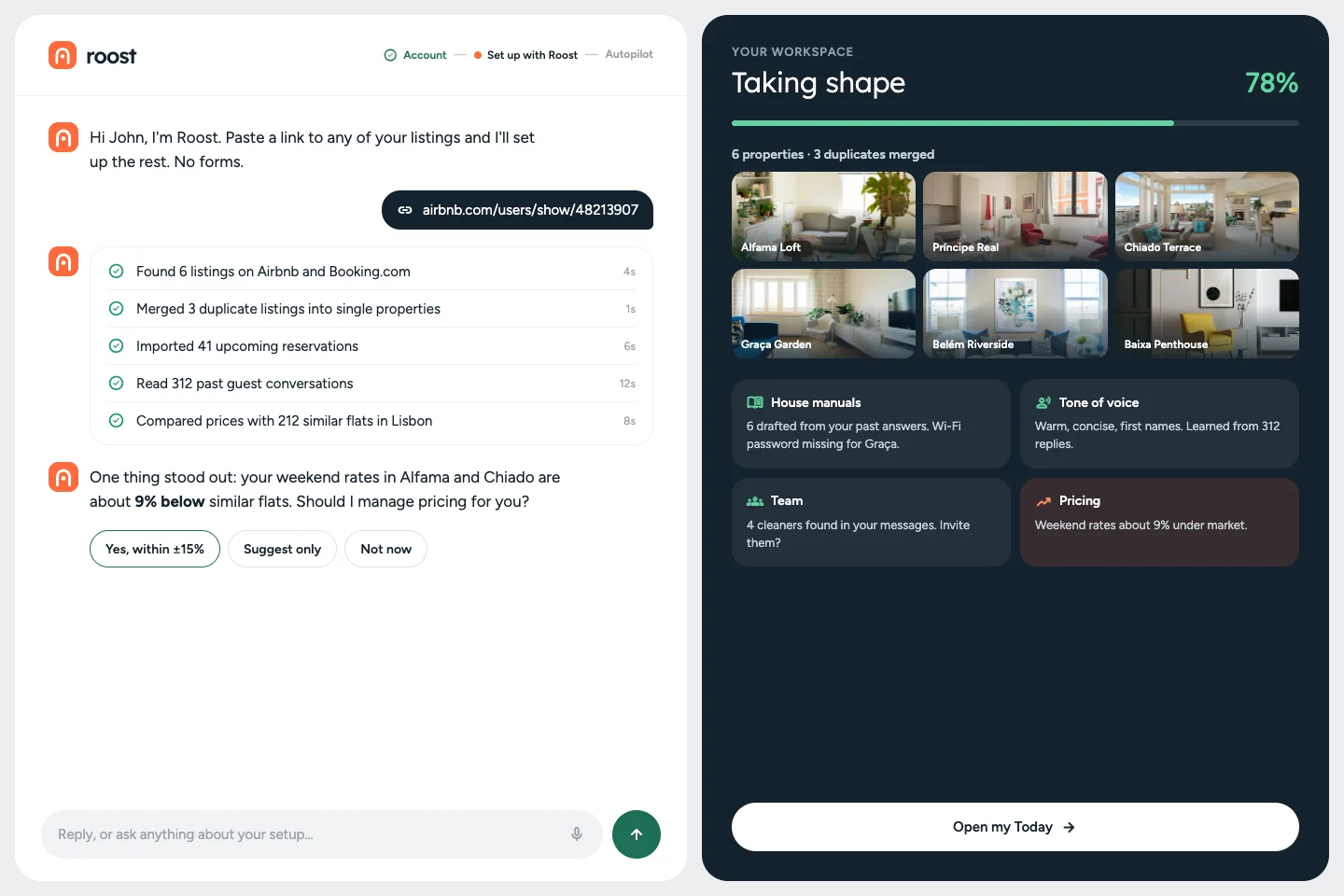
The four setup steps of version one become a single conversation. The host pastes a link to one listing, and Roost imports the portfolio, merges duplicates, drafts house manuals and picks up the host’s tone from past replies. Then it asks its first question.
Autonomy is set per task.
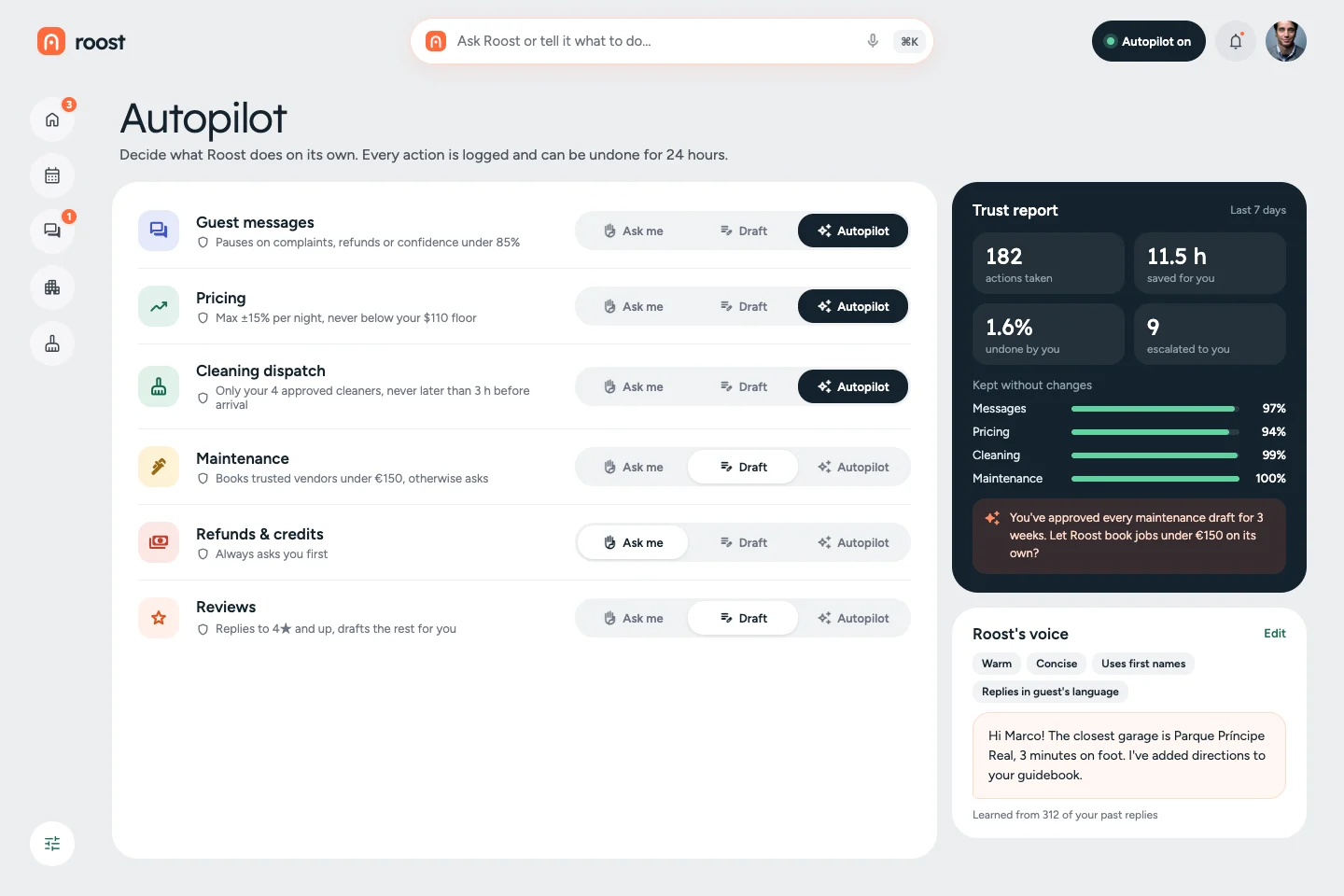
Each area of work has three levels: Ask me, Draft and Autopilot. Each has a guardrail written in plain language. A trust report shows how often the host kept Roost’s work as it was, and Roost only proposes a higher level once that record supports it.

Every action is explained.
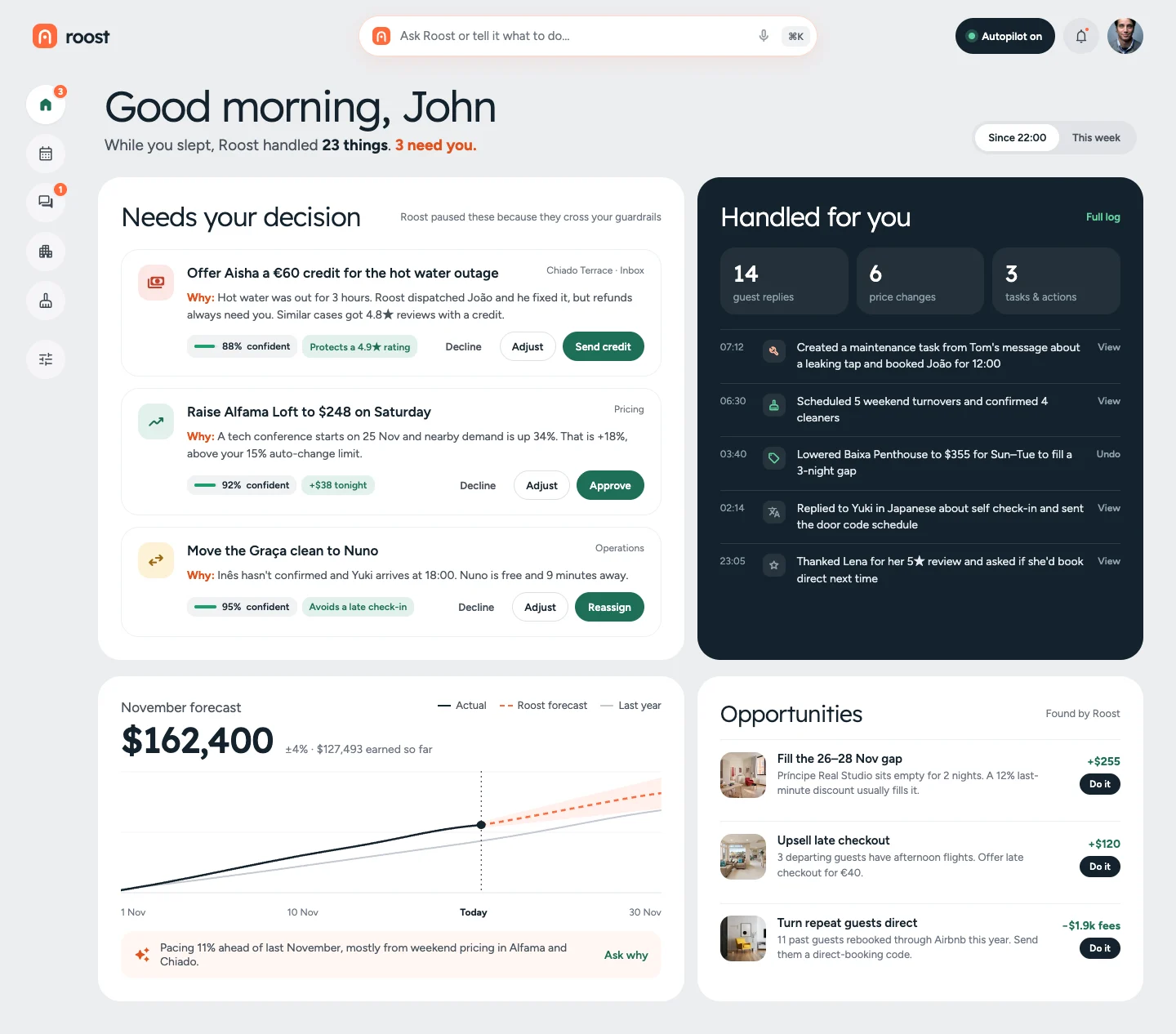
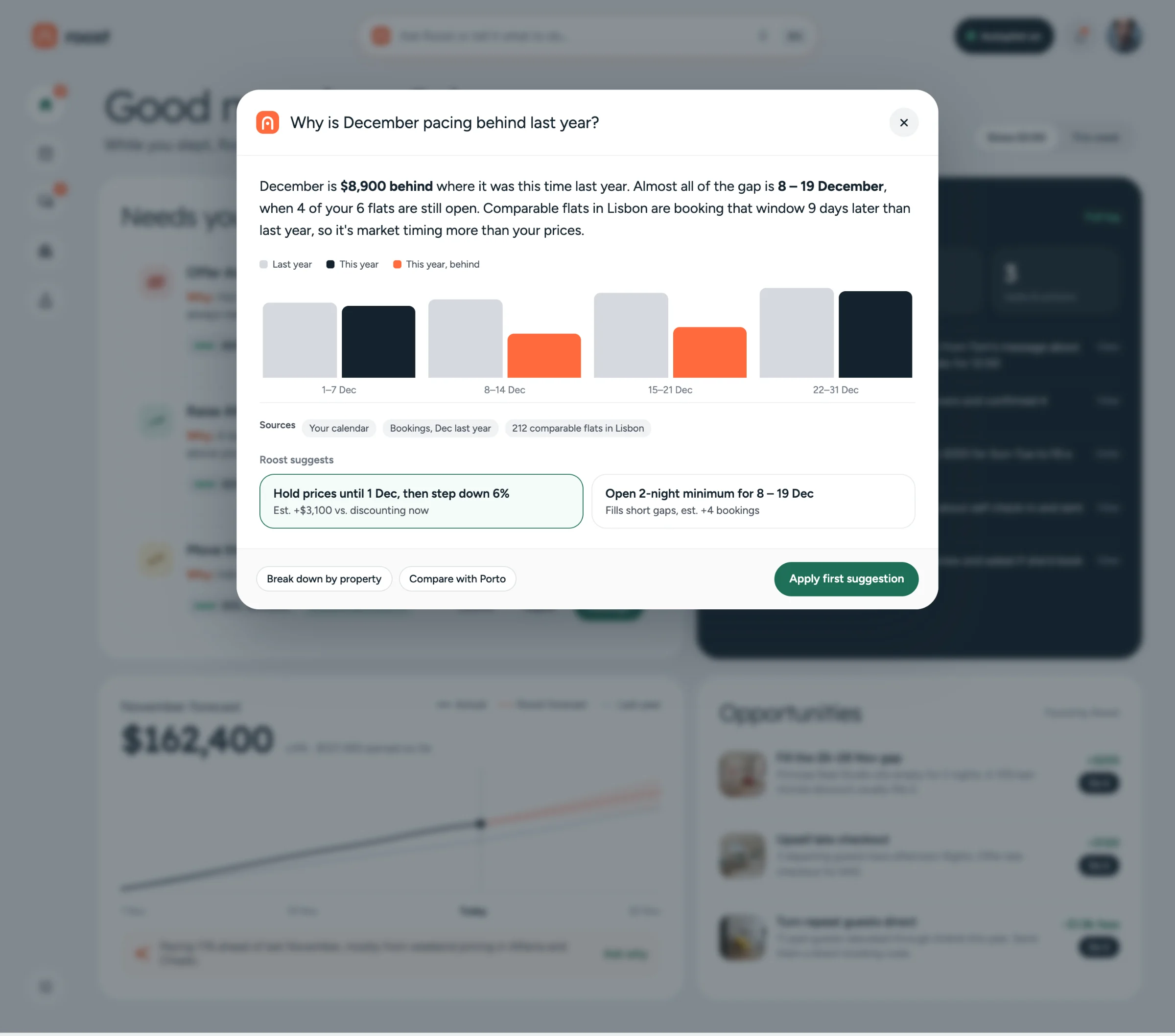
Every suggestion shows the reason, a confidence level and the data behind it. Every action is logged and can be undone for 24 hours. The pattern is the same everywhere, whether Roost is replying to a guest or changing a price.
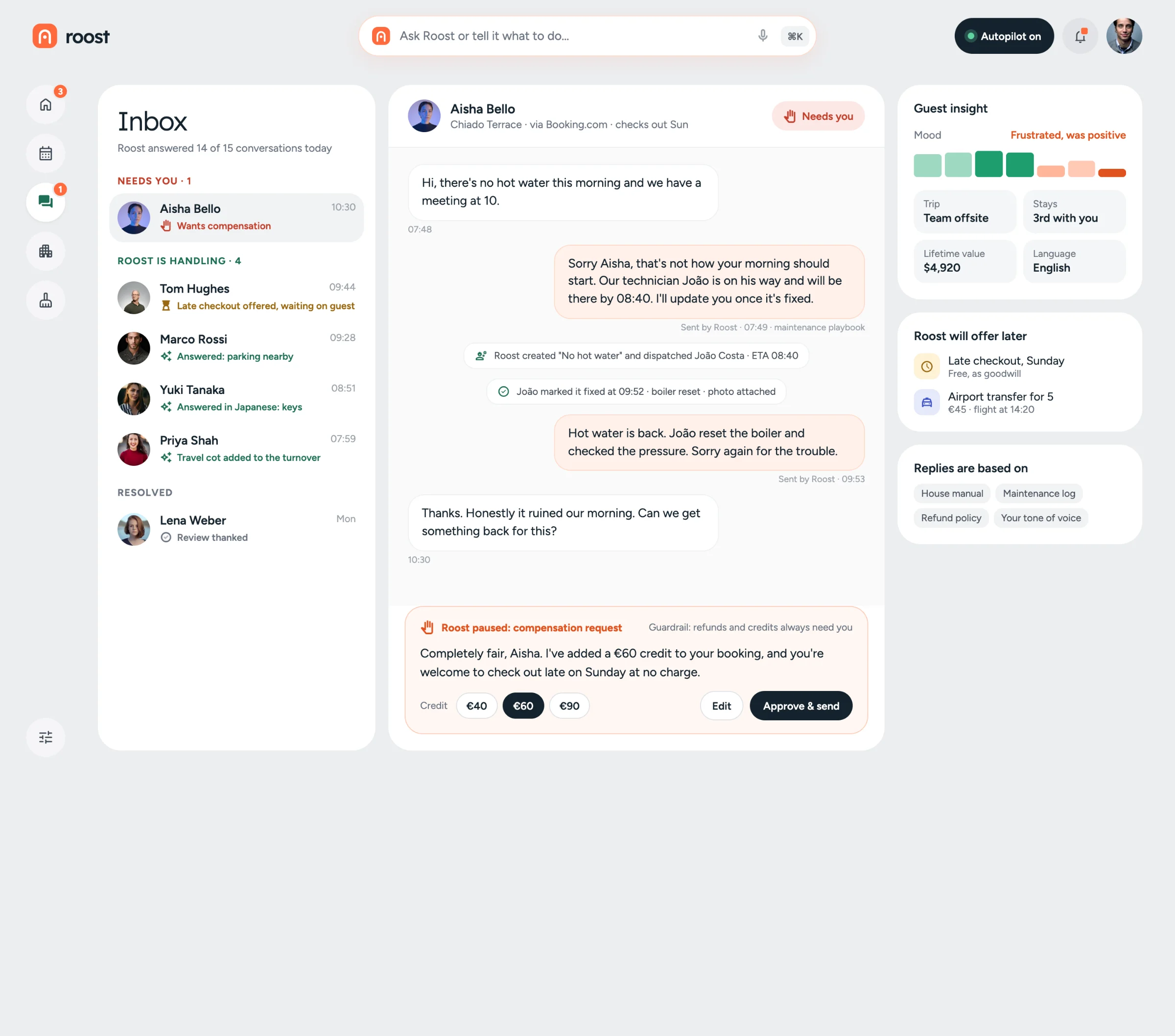
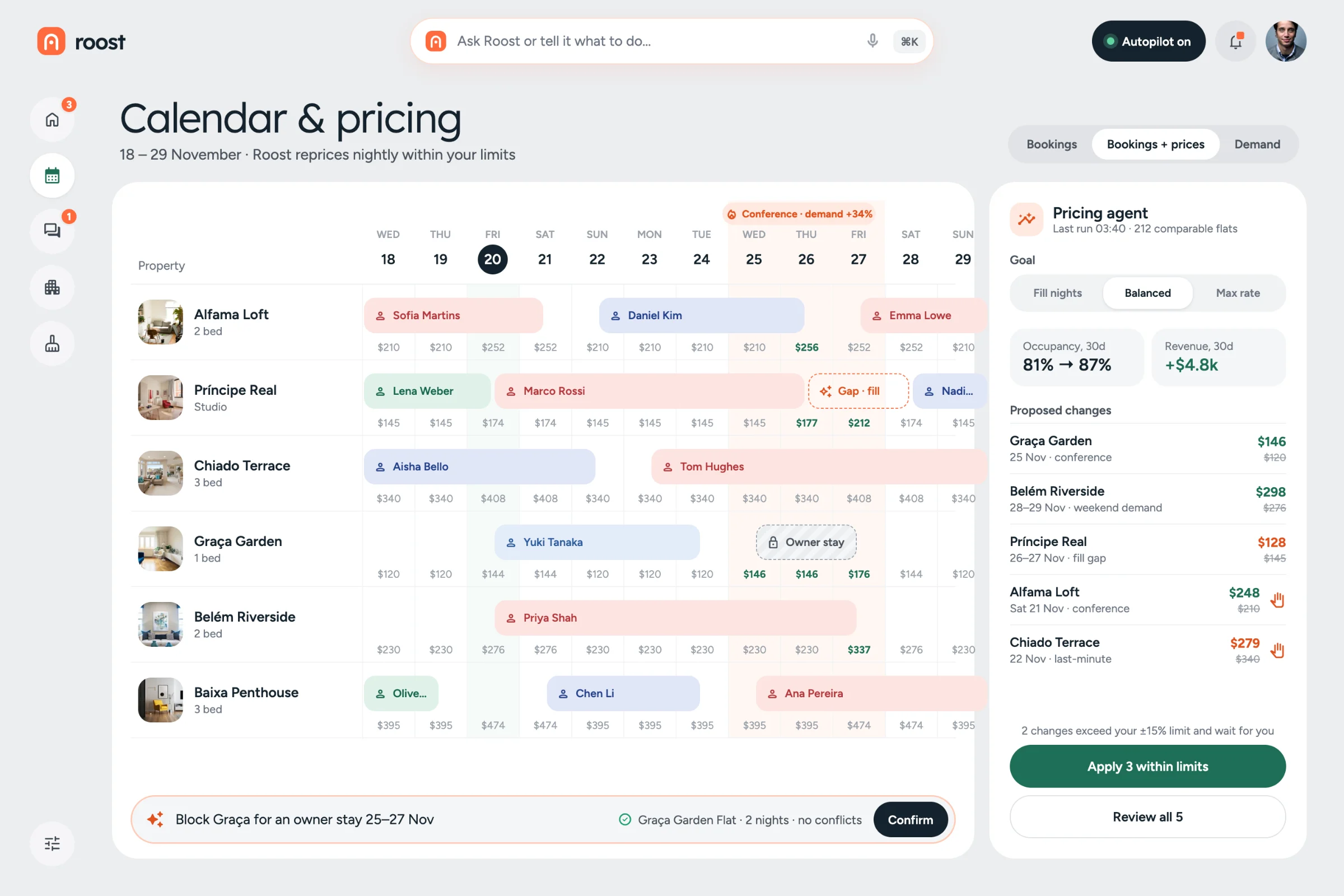
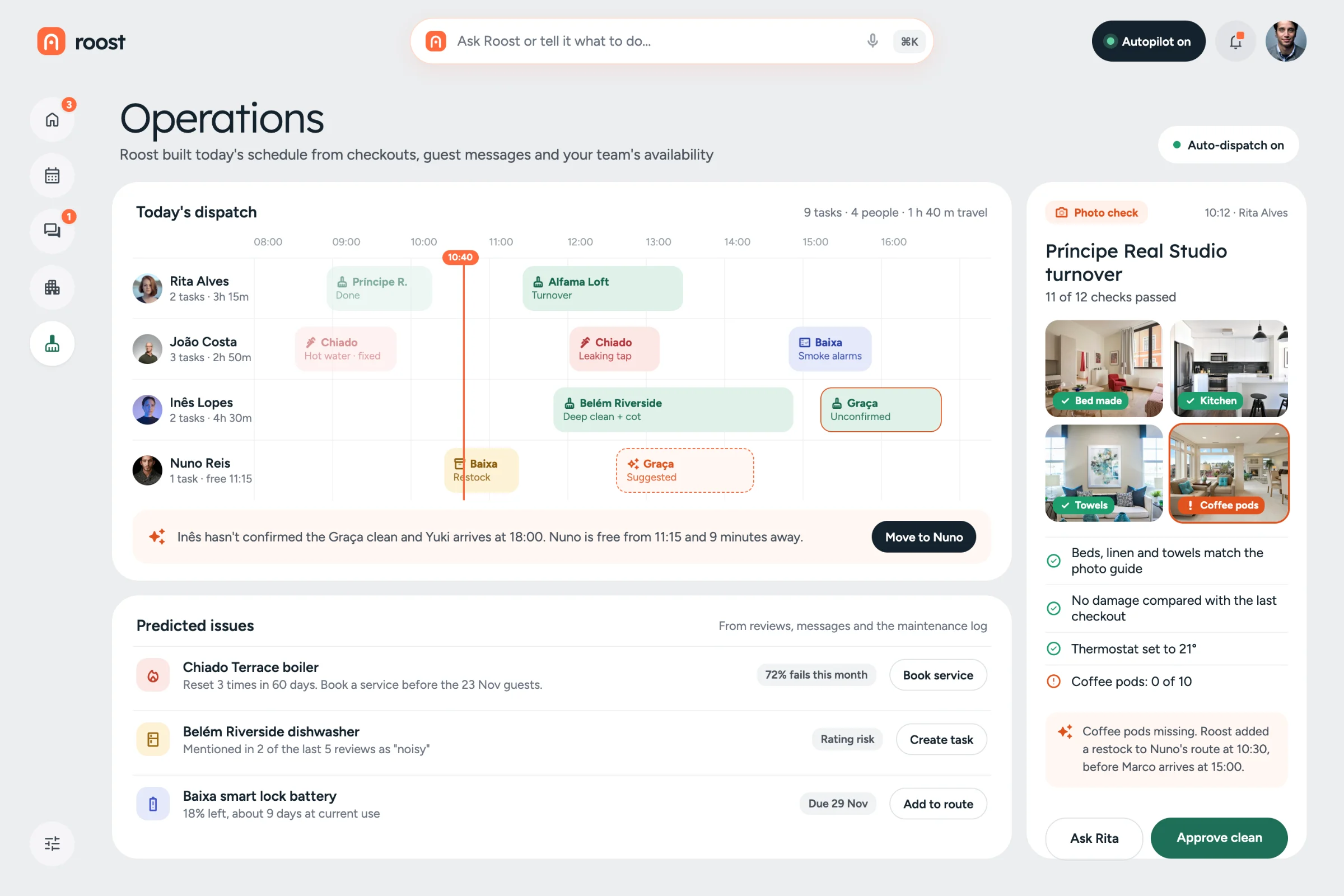
Named for arriving home.
A roost is a place to settle for the night. The mark combines an open doorway and a keyhole, for arrival and access. Apricot is the brand colour and marks anything Roost does on its own in the product. Green is kept for actions the host confirms.
AI that does the work and shows it.
The project delivered two complete versions of the product on the same structure, so hosts can move between them easily. Alongside them: the brand, user flows for both versions, and an autonomy model the team can apply to new features.
For the full experience, visit this case study from a desktop device.
The interactive prototypes and larger visuals are built for a bigger screen.
I design AI products people rely on.
Product and brand work for large companies and startups. If your team is bringing AI into a product, I’d be glad to talk.