Selling homes in a city that hasn’t been built yet.
Product designer, working with Publicis Sapient on an exploratory proof of concept. I took it from the first workshop to the visual prototype: narratives, personas, journeys, the AI experience and the interface.
High-net-worth buyers and investors are used to visiting, touching and comparing. Here there was nothing to visit.
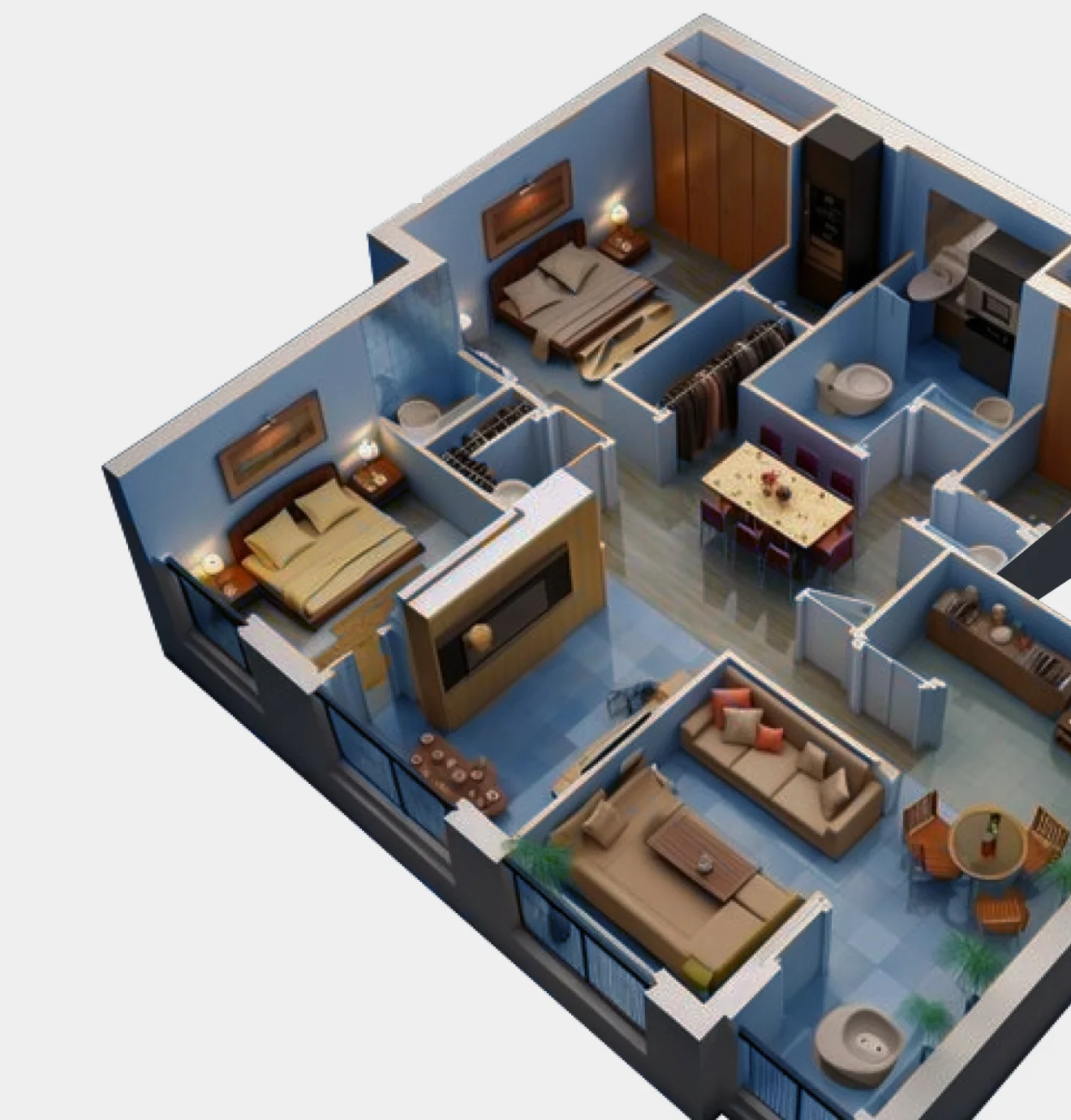
Replace filters and brochures with a guide. Hayyak asks what you want, builds the home in front of you, and hands over to an advisor when the decision gets serious.
Everything about The Line was a promise: renders, films and numbers. Buyers were being asked to commit to a vision rather than a building.
So the product couldn’t behave like a property portal. It had to tell a story about a way of life, then let each person place themselves inside it.
The audience is small, and its members have little in common. We defined three personas and brought them into every review. Each one pushed the product in a different direction and ended up shaping a different part of it.
{{ pv.line }}
Different reasons to buy, the same emotional arc on the site.
Hayyak is Arabic for “welcome”. It’s the first thing you meet on the site, and it asks one question: what would you like me to show you? Each entry point leads with a different lifestyle, and the guide adapts the tour to whoever answers.
The sidebar holds the classic controls: cluster, bedrooms, price, colour, style, furniture and partner packs. The conversation runs on top of the space. Anything Hayyak changes is marked in the sidebar, so you can talk, click, or do both, and it’s always clear what changed and who changed it.
Inside the room the sidebar collapses to a rail. Hayyak proposes and the user confirms with a clear yes or no. Nothing is added to a home without consent, and every answer changes something you can see, tagged in the room itself.
Home, cluster and city are levels of the same view, and moving between them replaces menus. Amenities sit on the map as places you can act on: join the gym, book a treatment, register for Sotheby’s, join the yacht club. “Back to my home” is always one tap away.
The investor path needed different things: sectors and returns, a side-by-side comparison, and a person at the right moment. The four screens are linked, so a choice on one carries into the next.
Conversational interfaces fail when people lose track of what changed and why. These rules kept Hayyak predictable. The interface stays black and white, so colour comes only from the imagery and from Hayyak.
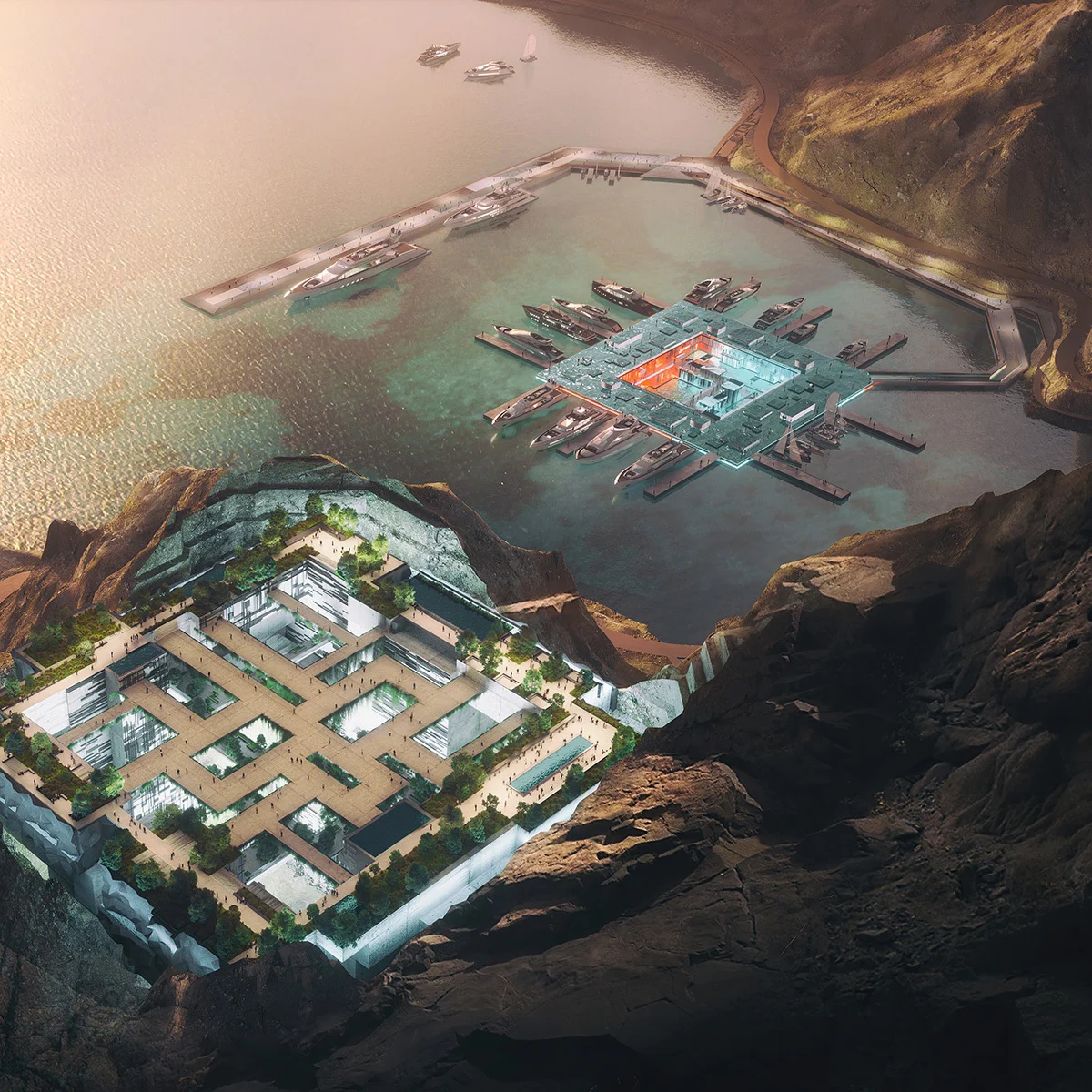
The guided, zoomable pattern carries to other NEOM destinations. On Sindalah island, Hayyak knows you came from the Hidden Marina and plans the visit around it.
On mobile, Hayyak picks up where you left off: continue designing, see your home, follow construction. The emailer is built from the choices you made.
No newsletter. The email is Omar’s own residence, what changed since his visit, and one way back into the conversation.
Omar, Residence 112-04 is still reserved in your name until 30 November. Hayyak saved every choice you made, and two new things have changed since your visit.
Built as a pitch with Publicis Sapient, the proof of concept had one job: win the bid. Instead of a deck, the client got to experience the product, a city sold through conversation, before anything went into production.
It followed the usual early-stage sequence: workshops to agree on the story, personas and journeys to keep decisions grounded, wireframes to test the structure, and a visual prototype with an AI guide at its centre.
For the full experience, visit this case study from a desktop device.
The interactive prototypes and larger visuals are built for a bigger screen.
Proofs of concept, AI-led experiences and prototypes that let stakeholders react before anything is built. If your team is exploring something new, I’d like to hear about it.